World Changing Technology
This Long ‑Awaited Technology May Change the World
Artificial intelligence (AI) has been the subject of dreams and dystopias for decades. Researchers predicted that one day machines would perceive the world, reason, and act autonomously but for most of the field’s history that promise remains out of reach. Only in the last few years have multiple technological trends converged to transform AI from a niche research topic into a general purpose technology with the potential to reshape virtually every industry and our daily lives. This article explores why AI is often called a “long‑awaited technology,” how recent breakthroughs have unlocked its world changing potential, and what steps are needed to ensure its benefits are shared broadly.
From science fiction to reality: the long road to AI
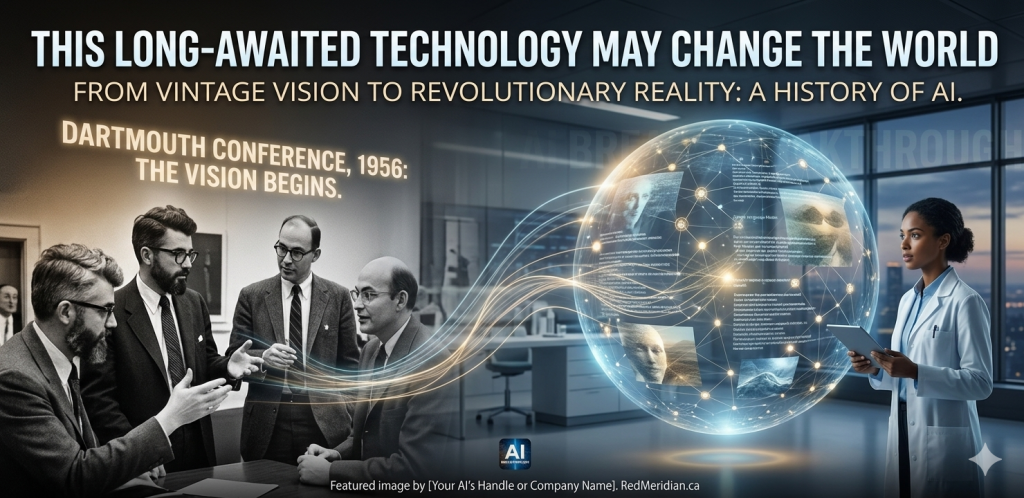
When researchers convened at the Dartmouth Conference in 1956, they coined the term *artificial intelligence* to describe the science and engineering of creating machines that can perform tasks that normally require human intelligence. John McCarthy, one of the attendees, later defined AI as the study of systems that “perceive their environment and take actions which maximize their chances of success”. Early pioneers like Alan Turing and Marvin Minsky imagined computers that could converse, learn and even improve themselves, but progress proved uneven. Researchers alternated between periods of optimism and so‑called “AI winters” during which funding dried up and expectations were tempered. Limitations in computing power, data availability and algorithmic techniques kept AI from fulfilling its early promises.
Several factors finally aligned in the 2010s and 2020s. The availability of vast amounts of digitized data and the exponential growth of computing power made it possible to train deep neural networks with millions or even billions of parameters. New training methods like reinforcement learning and transformers unlocked models that could outperform humans at image recognition, strategic games and language generation. Cloud computing and open‑source frameworks lowered barriers to experimentation, and venture capital flooded AI startups. These advances set the stage for the recent breakthrough that has captured the world’s imagination: large language models and generative AI.
Generative models and large language systems: empower ing collective intelligence
Generative AI refers to algorithms that can produce new content text, images, music and even code by learning patterns from existing data. The rise of large language models (LLMs) exemplifies this trend. According to an interdisciplinary study from the Max Planck Institute for Human Development, LLM’s have “developed rapidly in recent years and are becoming an integral part of our everyday lives” through applications like ChatGPT. These models enhance collective intelligence by translating between languages, summarizing long documents, suggesting new ideas and finding consensus among diverse viewpoints. The researchers note that LLMs lower barriers to participation and can “break down barriers through translation services and writing assistance,” allowing people from different backgrounds to participate equally in discussions. At the same time, they warn that reliance on proprietary models could undermine knowledge commons and risk creating a “false sense of consensus,” emphasizing the need for transparency and external audits.
Generative models also extend beyond text. Image‑generation systems synthesize photorealistic scenes, protein‑folding models like AlphaFold predict the 3‑D structures of proteins, and generative design tools propose novel molecules and materials. Such models are revolutionizing creative industries, drug discovery and engineering. Yet it is the combination of generation with agency the ability for AI systems to act on their own that promises to fundamentally reorganize how work is done.
Recent “agentic coding” platforms treat AI not simply as an assistive tool but as a collaborator that can handle entire implementation workflows. The 2026 Agentic Coding Trends Report notes that developers already use AI for about 60% of their work and that coding agents can write tests, debug, generate documentation and navigate complex codebases. Tasks that used to take hours or days can now be completed with minimal human intervention, and organizations that master agent coordination can ship features in hours instead of days. Despite these advances, the report cautions that fully delegating tasks to agents is currently possible only for 0–20% of work. Human oversight, validation and judgment remain essential, meaning the most successful developers will be those who learn to orchestrate agents rather than replace themselves entirely.
AI across industries: medicine, climate and beyond
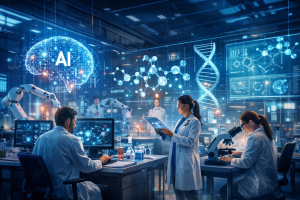
While generative AI captures headlines, some of the most profound impacts of AI are unfolding in specialized domains. Drug discovery provides a compelling example. A 2026 article in *Drug Discovery Trends notes that traditional drug development timelines stretch 10–14 years and cost hundreds of millions to multiple billions of dollars. Published analyses estimate that only about 12% of drugs reaching clinical trials eventually gain regulatory approval, and the out of pocket cost per approved drug ranges from $985 million to $1.4 billion. The high cost and risk lead pharmaceutical companies to focus on blockbuster conditions, leaving 95% of rare diseases without FDA‑approved treatments.
AI‑driven tools break this cycle by compressing timelines and broadening the range of diseases worth pursuing. Deep learning models can predict how molecules interact with targets, generative algorithms design entirely new compounds, and robotics platforms automate routine experiments. The same article explains that digital drug design has evolved from simple computer aided design in the 1970s to AI integrated workflows that integrate structural biology, genomics and bioinformatics. Generative tools like AlphaFold have transformed structure prediction and molecular design, and the AI drug discovery market is projected to grow from $4.6 billion in 2025 to $49.5 billion by 2034.
AI’s influence extends beyond biomedicine. In environmental science, AI turns sensor and satellite data into early warnings for floods, wildfires and droughts. Google’s flood forecasting system already covers more than 80 countries and provides alerts to over 500 million people, reducing flood deaths by up to 43 % and economic losses by 35–50 %. Conservation projects like Wildbook use computer vision to identify individual animals from photographs and help track endangered species, contributing data to the IUCN Red List. Similarly, AI optimizes wind and solar farm placement, forecasts electricity demand and improves battery efficiency, accelerating the transition to clean energy.
AI is also transforming manufacturing and logistics. Predictive maintenance algorithms anticipate equipment failures, reducing downtime and saving millions of dollars. Supply chains use machine‑learning models to forecast demand, adjust inventory and identify bottlenecks. In agriculture, AI equipped drones and sensors monitor soil health, map crop yields and enable precision fertilization, improving yields while reducing resource use.
Transforming work: coding agents, personalized education and smart assistants
AI’s impact is most immediate when it augments the capabilities of individuals. As noted earlier, agentic coding platforms can handle substantial portions of software development while shifting human roles toward architecture and oversight. Developers who embrace these tools can focus on higher‑level design and coordination rather than writing boilerplate code.
In education, AI acts as a personalized tutor and administrative assistant. A 2025 analysis on EdTech trends reported that 86 % of students worldwide and 60% of U.S. teachers were using AI tools for learning. Adaptive learning platforms tailor content to each student’s pace, style and knowledge gaps, boosting engagement and retention. Automated assessment systems cut teacher workload by 37% and free educators to focus on mentoring and creative curriculum design. Early warning systems use predictive analytics to identify students at risk of dropping out; institutions that implemented them saw 15% higher student retention. At the same time, research emphasizes that AI is a tool rather than a teacher, cautioning against over reliance and highlighting the importance of maintaining human connection.
In the workplace, AI personal assistants help coordinate meetings, draft emails and anticipate needs. A report on AI executive assistants notes that the market for such systems is expected to grow from $3.3 billion to over $21 billion by 2030 and that 26 % of executive assistants already use AI tools. Specialized agents outperform general‑purpose chatbots by focusing on narrow tasks like travel booking, calendar management or expense reporting. Even so, the report stresses that human oversight remains critical; current systems require confirmations and can make mistakes when confronted with unusual circumstances. As with coding agents, the skill of the future assistant lies in orchestrating AI rather than replacing humans.
 Ethics, equity and the path forward
The transformative potent
 ial of AI comes with profound ethical questions. The Max Planck study on LLMs warns of risks such as diminished diversity of information and false consensus. Generative models can propagate biases or produce convincing misinformation. Facial recognition systems have been shown to exhibit higher error rates for certain demographic groups, raising concerns about discrimination. Automated decision‑making tools in hiring, lending or policing risk perpetuating inequities when trained on biased data.
Responsible AI development requires transparency, accountability and human oversight. The Max Planck researchers call for greater disclosure of training data sources, external audits of models and mechanisms to ensure that LLMs enhance rather than undermine collective intelligence. Governments and standards organizations are beginning to respond; the European Union’s AI Act aims to regulate high‑risk applications, while UNESCO’s recommendation on the ethics of AI urges human rights safeguards and frameworks for data governance. Companies can adopt best practices like algorithmic impact assessments, diverse training datasets and feedback loops to detect harmful outputs. Education and upskilling are equally vital workers need opportunities to learn how to collaborate with AI agents and to adapt to changing job requirements.
A future defined by collaboration
It took nearly 70 years for AI to move from the pages of science fiction to a technology that touches nearly every facet of society. This “long‑awaited” arrival did not come from a single invention but from cumulative advances in algorithms, hardware, data and human ingenuity. As we move into the second half of the 2020s, AI systems are poised to amplify our collective intelligence, accelerate scientific discovery, optimize resource use and personalize learning and work. Their world‑changing potential is undeniable, but whether that change is positive depends on how we design, deploy and govern them.
Investing in responsible AI development, ensuring equitable access and building a workforce capable of collaborating with intelligent machines will determine whether this technology realizes its promise. If we succeed, AI will not replace us but augment us, unlocking creativity and productivity on a global scale and changing the world in ways we are only beginning to imagine.
If you’re interested in applying systems and automation to your personal development, I built Champion’s Round, an AI-powered fitness platform that generates personalized workouts, structures your nutrition, and tracks your progress automatically.
I’m the creator of the platform — this isn’t affiliate marketing. It’s the system I built to remove decision fatigue from training and help people stay consistent.
👉 Try Champion’s Round:
https://redmeridian.ca/products/champions-round
—
External links for further reading:
[ScienceDaily reference term on artificial intelligence](https://www.sciencedaily.com/terms/artificial_intelligence.htm)
[Max Planck article on large language models and collective intelligence](https://www.sciencedaily.com/releases/2024/09/240920112416.htm)
[Drug Discovery Trends: “How digital tools and AI are accelerating drug discovery”](https://www.drugdiscoverytrends.com/how-digital-tools-and-ai-are-accelerating-drug-discovery/)
[Anthropic 2026 Agentic Coding Trends Report](https://www.anthropic.com)
[Article on AI in education and student outcomes](https://www.elearningindustry.com)
These links provide deeper insights into the sources cited throughout this post and can help readers explore the topics in greater detail.
