The Science Behind Personalized Fitness: Why Generic Plans Fail
Understanding Why One Size Fits All Doesn’t Work
It’s tempting to look for a simple training plan that promises to deliver results for everyone. The reality is that generic programs often leave people disillusioned because they fail to account for the unique characteristics that make each body respond differently. When a coach prescribes the same workout plan for everyone, it assumes everybody starts with the same fitness level, movement ability, recovery capacity and lifestyle. These plans also tend to be static; they don’t evolve based on your progress, feedback or shifting schedule. As a result, participants often hit plateaus, sustain injuries or simply lose motivation because the program doesn’t address their needs.
Genetic and Physiological Differences
Scientific research shows that exercise responses vary dramatically from person to person. A landmark endurance‑training study by Claude Bouchard and colleagues put volunteers through a 20‑week aerobic program. The improvements ranged from almost no change to over 40% increase in VO₂
Performance isn’t determined solely by time spent in the gym; it’s also shaped by what happens outside. Sleep, nutrition and stress management play pivotal roles in recovery and adaptation. The Central Athlete article notes that inadequate sleep impairs hormonal balance, reduces the risk of illness and injury rarely adjust for poor sleep or high stress levels; they simply prescribe the same workload regardless of your recovery status. A personalized program, on the other hand, uses metrics such as heart‑rate variability or subjective readiness scores to dial back or increase training load based on how well you’re recovering.
Nutrition needs also vary. A 70kg endurance athlete and a 100kg powerlifter have very different energy requirements and macronutrient ratios. Personalized programs often include dietary guidance or refer you to a nutrition professional who can tailor your eating plan to your goals. Stress whether from work, family or inadequate recovery can hinder performance. Coaches consider these lifestyle factors, adjusting training intensity or recommending restorative activities like mobility work or meditation.
Training History and Injury Prevention
Your training background and injury history determine which exercises are appropriate. Someone recovering from a shoulder injury shouldn’t blindly follow a program full of overhead presses, yet many generic plans prescribe exactly that. The B‑One Training article points out that general programs can include movements that are unsuitable for the individual, increasing the risk of injury. Personalized coaching takes into account previous injuries, movement limitations and your experience level. This helps choose variations that challenge you without aggravating old injuries.
Furthermore, personalized programs evolve with your progress. By regularly assessing performance (e.g., strength tests or mobility assessments), a coach can increase intensity or change exercises as you improve. This adaptability promotes continuous improvement and reduces the likelihood of overuse injuries that come from performing the same movements week after week. Not only does personalization safeguard your health, it also ensures that you’re consistently challenged preventing boredom and stagnation.
Psychological and Motivational Factors
Adherence is arguably more important than the specifics of any training plan. According to self‑determination theory, people are more likely to stick with a program when they feel autonomy, competence and relatedness. Personalized coaching fosters these qualities by involving you in the planning process, setting achievable milestones and providing supportive feedback. Knowing that your program is uniquely yours makes it feel more meaningful and encourages you to stay committed.
Generic programs often neglect these psychological needs. They may set unrealistic goals that leave you discouraged or fail to consider your preferences (e.g., if you enjoy cycling over running). Personalized plans integrate activities you find enjoyable, boosting intrinsic motivation. Coaches also adjust the difficulty so that you experience success while still being challenged. Over time, this positive reinforcement builds confidence and helps turn exercise into a sustainable habit.
The Timing Factor: Chronotype and Schedule
The time of day when you exercise can influence your performance. Some people (“morning larks”) feel strongest early in the day, while others (“night owls”) perform better in the afternoon or evening. A section of the Central Athlete article highlights that aligning training with your chronotype can lead to better results. Generic programs, which often prescribe fixed times or fail to consider your daily schedule, might cause suboptimal performance or missed workouts.
Personalized programs build around your life. If you have an early‑morning job, the plan might prioritize shorter morning sessions or lunchtime workouts. If you’re a night owl, your plan may include evening sessions when your body temperature and reaction times peak. By tailoring training times to your natural rhythms and responsibilities, personalized programs increase compliance and effectiveness.
Why Generic Plans Fail and What to Do Instead
To summarise, generic training plans fail because they assume uniformity: identical genetics, identical recovery capacities, identical schedules, and identical motivations. They’re typically static and lack feedback loops. The science shows that people respond very differently to the same training stimulus due to genetics, lifestyle factors, training history and psychological readiness. Without personalization, these programs either under‑stimulate (producing little progress) or over‑stress (leading to burnout and injury).
The solution is to evaluate and adjust. Start with an honest assessment of your fitness level, movement quality and lifestyle. Build a program that suits your physiology, preferences and goals. Use regular check‑ins and metrics to guide progress rather than blindly following a fixed script. If possible, work with a qualified coach or use intelligent training platforms like Red Meridian’s ChampionsRound that adapt workouts based on your performance data. Personalized fitness isn’t a luxury; it’s a necessity if you want sustainable results and long‑term health.
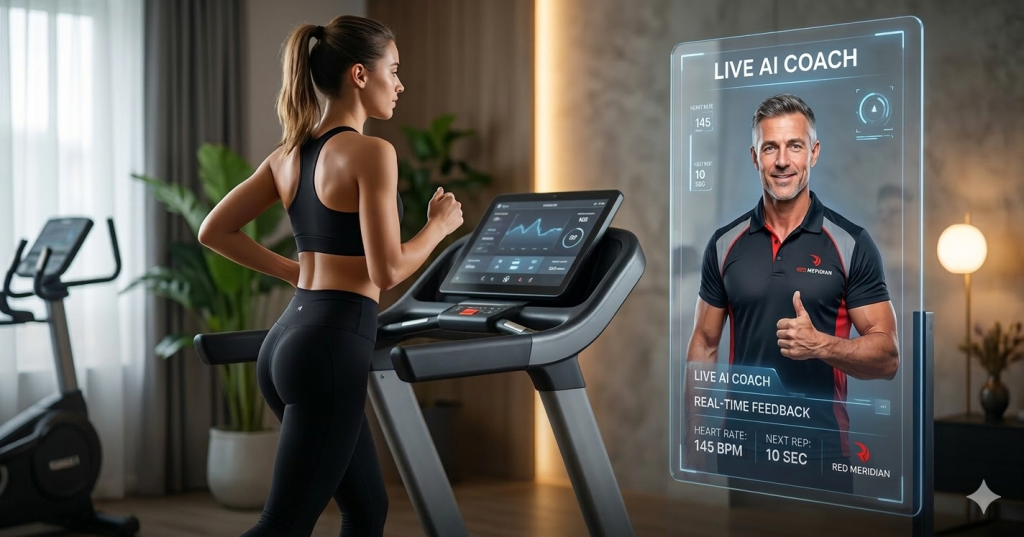
Stop following generic plans. Experience Red Meridian’s personalized fitness platform with a live AI avatar coach that adapts your training to your body, goals, and performance.
References
- B ‑One Training – How does personalized training differ from generic fitness programs? – explains how generic programs assume uniform fitness levels and don’t adapt to progress, causing plateaus and injuries.
- Central Athlete – The Science Behind Customized Coaching – describes genetic differences in exercise response and highlights lifestyle factors, motivation, and injury prevention.
- Genes – Genetic Variation in VO₂max Response to Training – notes that genetics account for up to 47 % of variability in VO₂max improvements and individuals experience diverse responses.
- Sleep Medicine Clinics – Sleep and Athletic Performance – reports that athletes sleeping less than eight hours are about 1.7 times more likely to be injured and emphasises the role of recovery, nutrition, and stress management.
- Frontiers in Psychology – Self‑Determination Theory and Exercise – explains how satisfying autonomy, competence, and relatedness needs fosters intrinsic motivation and adherence in exercise settings.
