Scale Your Persona: The Rise of HeyGen Live Avatars

As artificial intelligence matures, digital personas are moving from pre‑recorded talking heads to interactive, lifelike companions. Early chatbots such as ELIZA and A.L.I.C.E. could only respond with scripted text, yet they convinced many users that a computer was holding a human conversation. Advances in deep learning and large language models (LLMs) have since given rise to sophisticated AI agents that can understand natural language, generate human‑sounding speech and even convey facial expressions. Now, companies like HeyGen are pioneering real‑time, photorealistic avatars that allow you to scale yourself your tone, appearance and brand across countless digital interactions.
The Evolution of Digital Avatars
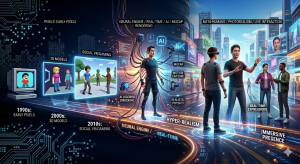
Before exploring HeyGen’s latest innovation, it’s worth tracing the evolution of digital avatars. The vision of lifelike AI characters began with chatbots rule‑based programs that relied on keyword analysis. Pedagogical agents such as AutoTutor responded to written input by classifying speech acts and interpreting learner actions. While these early agents offered a glimpse of human machine dialogue, they lacked real facial animation, body language and immediacy.
The last decade ushered in the era of talking head videos. Generative AI companies like HeyGen allowed users to upload a photo, type a script and produce a video of a digital clone delivering the message. These pre‑rendered avatars were suitable for asynchronous content such as marketing videos, training modules and personalized outreach. Yet they remained static; the “actor” could not pause, respond to a question or adapt its delivery. The next leap required real‑time interaction.
How HeyGen Live Avatars Work
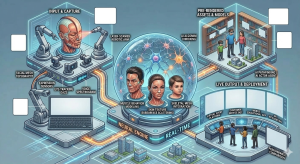
HeyGen LiveAvatar is a next‑generation platform that streams AI avatars in real time for two‑way conversations. According to HeyGen’s help center, LiveAvatar is designed for instant interaction the avatar listens, responds and speaks back in real time with natural lip‑sync and gestures. The platform combines several key features:
- Hyper‑realistic rendering – HeyGen’s advanced rendering technology produces lifelike performance, enabling faces that smile, furrow brows and move naturally.
- Real time interaction – The system can listen and respond through voice, video or text with minimal delay. Developers can connect LiveAvatar to their own LLMs so the avatar can answer context‑specific questions.
- API first architecture – LiveAvatar exposes an API and SDK for easy integration into apps, websites or live experiences. The architecture is built on WebRTC streaming for low‑latency audio and video.
- Scalable performance – The infrastructure supports large concurrent sessions with consistent quality. Each credit provides 30 seconds to one minute of streaming, depending on the integration mode.
To create your own LiveAvatar, you simply record a two minute uncut video (listening for 15 seconds, talking for 90 seconds, then listening again). The system uses that footage to model your appearance and voice, then renders your avatar on‑the‑fly when streaming. For those who prefer not to appear on camera, HeyGen offers preset presenters digital hosts whose likeness you can license without recording yourself.
Real Time Interaction: The Tech Behind the Magic

Creating a face‑to‑face conversation with an AI avatar requires more than just a talking head. Real time interactive avatars combine five core technologies:
1. Streaming automatic speech recognition (ASR) – Captures the user’s speech as it is spoken and converts it into text. The TrueFan implementation guide notes that real‑time avatars rely on streaming ASR to maintain a latency below 300 ms.
2. LLM reasoning and retrieval‑augmented generation (RAG) – Large language models such as GPT‑4 interpret the user’s intent and generate a relevant response. RAG pipelines fetch context from knowledge bases so the avatar can answer questions accurately and in your brand voice.
3. Neural text‑to‑speech (TTS) – Once the LLM composes a reply, a neural TTS system converts the text into expressive speech. Premium voices retain your natural tone and cadence; HeyGen’s Veo 3.1 update allows creators to maintain their real voice and persona across multi‑speaker videos.
4. Live animation rendering – The avatar’s face and body must animate in sync with the speech. HeyGen’s Avatar IV engine uses a multimodal voice‑to‑motion model that maps tone and emotion to facial expressions, hand gestures and full body movements. This technology makes digital personas feel alive, eliminating the need for manual keyframe animation.
5. WebRTC orchestration – The entire pipeline is orchestrated via WebRTC, enabling two way audio and video streaming in the browser with low latency. TrueFan emphasizes that audio round‑trip must stay below 300 milliseconds and visual sync within one second to make conversations feel natural. Voice activity detection (VAD) allows users to interrupt the avatar mid‑sentence; the system barge‑ins seamlessly.
Together, these components create an AI stack sometimes called Agentic AI. It delivers human nuance at cloud scale: your avatar can chat with hundreds of users simultaneously while still making each interaction feel personal.
Practical Applications and Benefits
Marketing and Sales

Modern buyers expect personalized interactions at every touchpoint. HeyGen LiveAvatar enables businesses to deploy virtual brand ambassadors that greet prospects by name, answer product questions and deliver pitches in a human voice. Companies like Reid AI, Coursera, HP, Bosch and Proto Hologram already use HeyGen avatars to field customer questions and run demonstrations. Because the avatar is powered by your LLM, it can tailor scripts to each viewer highlighting relevant features, offering discounts and providing next steps all without requiring a sales representative to be on call.
Training and Education

Education is another natural fit. AI powered avatars can serve as immersive tutors, guiding learners through complex topics and adapting content in real time. The Frontiers article on educational avatars notes that these systems can listen to learners’ spoken input, generate answers using an LLM and reply via synthetic voice. By providing individualized and contextualized instruction, AI avatars can coach students on foreign languages, soft skills or technical concepts. LiveAvatar’s two way interactivity allows learners to ask follow‑up questions and clarify misunderstandings, enhancing engagement over static videos.
Customer Support and Onboarding

Customer service teams can deploy LiveAvatars as virtual support agents available 24/7. The help center highlights use cases such as onboarding new users, troubleshooting issues and delivering personalized demos. Unlike chatbots that rely on text, LiveAvatar replicates the warmth of a human conversation; it can show empathy through facial expressions and listen attentively before responding.
Webinars and Live Events

Creators and media producers can host interactive webinars or product launches using digital presenters. LiveAvatar supports large concurrent sessions with consistent quality, so thousands of attendees can watch and chat with your avatar simultaneously. Integration with tools like OpenAI Sora 2 allows dynamic B‑roll and action shots generated from simple text prompts, injecting cinematic visuals into live presentations.
Ethical Considerations and Authenticity
As avatars grow more lifelike, ethical issues come to the fore. The Frontiers paper highlights concerns about incorrect information and data protection when deploying AI based educational avatars. When training your own LiveAvatar, you must follow HeyGen’s consent guidelines: record an uncut video in a well lit environment and ensure you have rights to use your likeness. Transparency is essential; viewers should know when they are interacting with an AI and not a human.
There is also a broader question of authenticity. An avatar may replicate your appearance and voice, but does it represent your personality? HeyGen aims to preserve individual nuance its Veo 3.1 update lets creators maintain their real voice and character. Still, digital clones should be used thoughtfully. For example, companies may choose a preset presenter rather than replicating an executive’s likeness to avoid overexposure. In sectors like healthcare or education, guardrails must ensure AI guidance aligns with professional standards and ethical norms.
Future Trends: Scaling Your Persona

HeyGen’s LiveAvatar is part of a broader movement toward scalable, humanized AI. The platform’s API‑first design hints at a future where avatars are embedded across websites, messaging platforms and augmented reality devices. As generative models improve, we can expect:
- Personalized personalities – Avatars will adopt brand tone and humor, adjusting style based on the viewer’s preferences and cultural background. Real‑time translation will allow avatars to converse in multiple languages effortlessly.
- Multi‑modal storytelling – Integration with tools like Sora 2 will automatically generate B‑roll, backgrounds and camera angles from text prompts. This means your avatar can illustrate complex stories with dynamic visuals in real time.
- Agentic ecosystems – The agentic AI stack powering LiveAvatar may converge with robotics, AR/VR and IoT devices. Imagine a digital concierge greeting guests in a hotel lobby or a holographic instructor guiding an augmented‑reality exercise session.
- Regulation and standards – As deepfakes proliferate, regulators will likely enforce transparency and consent requirements. Companies like HeyGen must develop watermarking and verification mechanisms to maintain trust.
How we Integrate LIVE AVATAR into our Products
How we Integrate LIVE AVATAR into our Products
Our flagship product ChampionsRound is an adaptive AI-powered fitness application that automates most of the work for users who want to stay in shape. For generic programs you need your nutrition and workouts planned out, then you need to carve out enough time to workout and eat. With ChampionsRound most of that is automated for you.
The AI Coach knows your data, your macros, and generates a structured 35 minute HIIT workout designed to move you closer to your goal. The AI also creates meal plans that match your macros with recipes and ingredients so you don’t have to think about it.
What makes the experience more interactive is that the coach itself is delivered through a Live AI Avatar named Jessika. Instead of static workout instructions, users interact with a real time AI coach that can guide sessions, explain exercises, and respond to users during the experience. This makes training feel less like reading a program and more like working with a live coach.
The result is a system that frees builders and entrepreneurs to focus their energy on their work while their fitness is intelligently managed in the background.
Automate your fitness today at: https://redmeridian.ca/products
Conclusion
HeyGen LiveAvatar is more than a product update. It reflects a broader shift toward AI systems that can communicate, adapt, and scale human presence in ways that were not previously possible. As these tools continue to improve, the advantage will go to the people who know how to apply them with purpose, not just watch them from a distance.
If you want to stay ahead of where AI is going and learn how to apply it in practical ways, join my free Red Meridian AI Automation community. It is built for business owners, professionals, and builders who want real AI workflows, smarter systems, and less manual work.
